

Home / Markets and shipping
Where it ships from and to
Three ports. One honest transit time.
Indian spices reach almost every food market in the world. Below is where we load your container, how long the sea leg usually takes to each region, and exactly which documents travel with the cargo — so you can plan your arrival before you place the order.
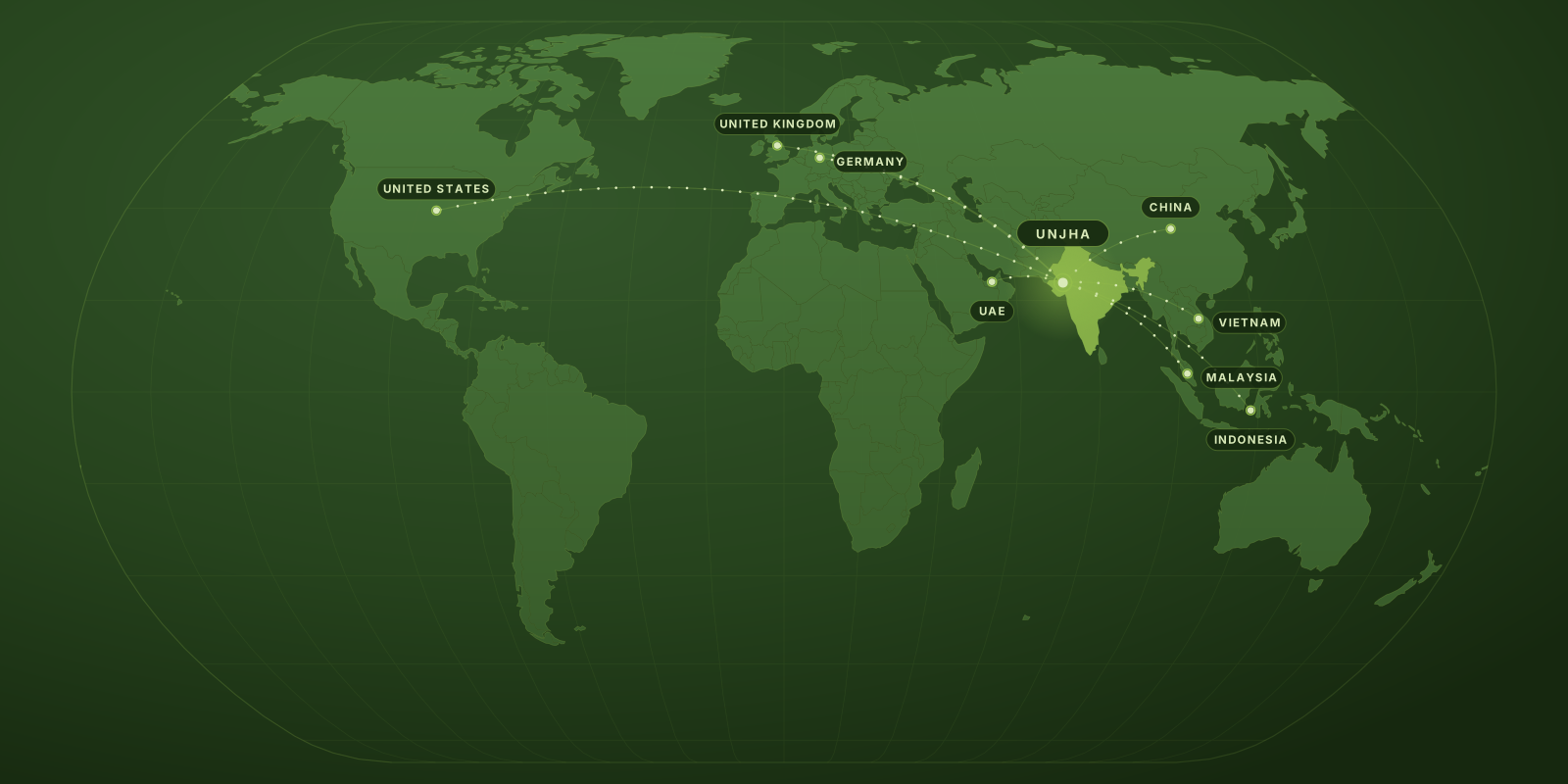
The routes on this map are the largest destinations for Indian spices worldwide, drawn from Unjha because that is where we load from. They are the shape of the trade, not a customer list — we do not publish where our own containers have gone without the buyer’s permission. Give us your port and we will tell you plainly whether we have shipped there before.
Mundra
Our first choice for most cargo. It is the closest deep-water port to Unjha by road, has good sailings both west and east, and in our experience the cargo arrives with the least handling damage.
Kandla
Used when the rate or the sailing suits you better, or when your own nominated carrier calls here instead of Mundra.
Nhava Sheva
A longer road leg from Unjha, but usually the right choice for part-container (LCL) shipments and for destinations that connect better out of Mumbai.
Indicative transit
Sailing time,
not door time.
These are port-to-port figures. Add your own inland leg at the far end, and add about a week if the routing includes a transhipment.
| Region | Example destination | Typical sailing | Common terms |
|---|---|---|---|
| Middle East | Jebel Ali, Dammam | 5 to 9 days | FOB, CFR |
| Southeast Asia | Port Klang, Ho Chi Minh | 10 to 16 days | FOB, CFR |
| East Asia | Shanghai, Busan | 18 to 26 days | CFR, CIF |
| Europe | Rotterdam, Hamburg | 18 to 28 days | CFR, CIF |
| United Kingdom | Felixstowe | 20 to 30 days | CFR, CIF |
| North America | New York, Los Angeles | 28 to 40 days | CFR, CIF |
| Africa | Mombasa, Durban | 12 to 22 days | FOB, CFR |
Use these ranges for planning only. Once your container is booked, the carrier’s confirmation is the only schedule that counts, and that is the one we send you.
Incoterms
Which term
you should
actually ask for.
CIF looks easiest because one number covers everything. But it also means you are buying ocean freight through us, at whatever rate we were quoted. If you already ship volume, your own freight contract will usually beat ours — so ask for FOB and keep the difference. We will tell you which way round is cheaper for you.
More buyer questions ↗| Term | We arrange | You arrange | Best when |
|---|---|---|---|
| FOB | Goods loaded on board | Freight and insurance | You have a freight contract |
| CFR | Goods and ocean freight | Insurance | You want one less booking |
| CIF | Goods, freight, insurance | Import clearance | Occasional or first shipments |
Document set
What travels
with the
cargo.
Send us your customs broker’s checklist when we sign the contract, not after the vessel sails. Requirements differ from country to country, and discovering a missing document at the destination is expensive and slow.
| Commercial invoice | Always |
|---|---|
| Packing list | Always |
| Bill of lading | Always |
| Certificate of origin | Always, preferential where applicable |
| Phytosanitary certificate | Most destinations |
| Certificate of analysis | On contract |
| Health certificate | Destination dependent |
| Fumigation certificate | Destination dependent |
| Insurance certificate | CIF shipments |
Give us a port.
Your destination port and the quantity are enough for a first price. Everything else we can work out together.